
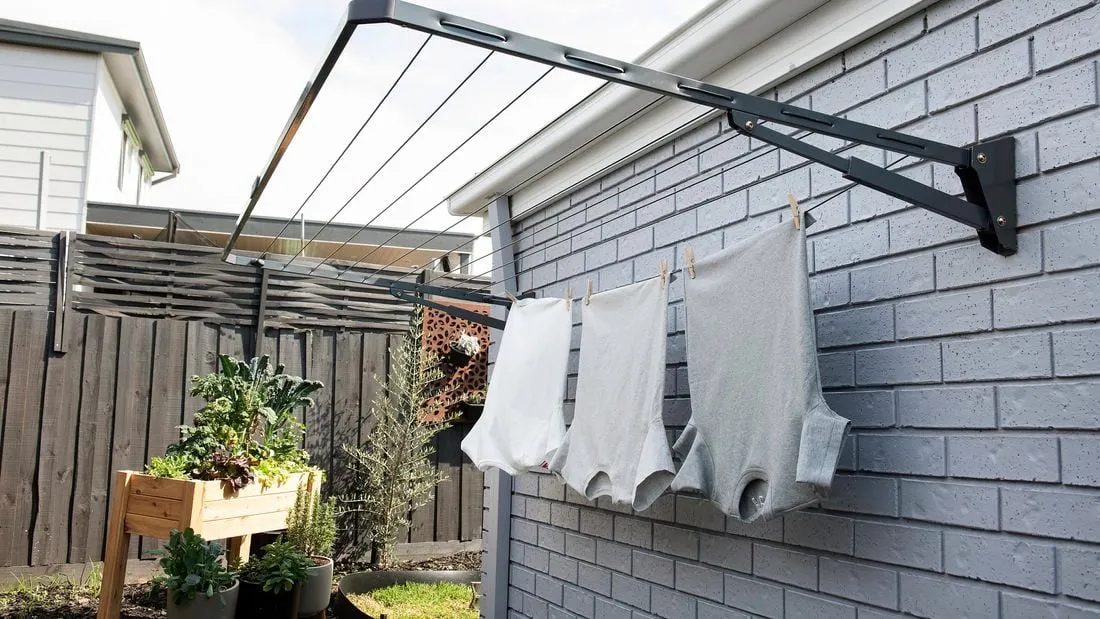
Wall-mounted clotheslines can be useful when outdoor space is tight, but not every property has the right wall in the right place. A fence may be unsuitable for fixing, a rental agreement may limit permanent changes, or the available wall may spend most of the day in deep shade.
In those situations, it is worth looking beyond the wall. A ground-supported setup can create a dedicated drying area while giving homeowners more freedom to choose where washing actually hangs.
Look at the Yard Before the House Wall
It is easy to assume the clothesline should sit against the house because that is where many traditional designs are installed. Start instead by observing the entire outdoor area.
Look for useful sunlight, airflow and a reasonably direct path from the laundry. The best position may be beside a garden, along the edge of a courtyard or in another open section where clothing can dry without blocking everyday movement.
Two or three days of observation can reveal more than choosing a location from measurements alone.
Know When Freestanding Makes Sense
A freestanding washing line can be useful when attaching equipment to an exterior wall is inconvenient or simply does not suit the layout.
This approach can also help when windows, doors, pipes or outdoor equipment occupy the available wall. Instead of squeezing a clothesline into whatever wall space remains, the drying area can be planned around where it will function best.
That does not mean every open patch of ground is suitable. The structure still needs enough clearance and a stable installation point.
Measure the Working Area, Not Just the Frame
Clotheslines need more room in use than their listed dimensions suggest. Shirts extend beyond the lines, sheets hang down, and a person needs space to move with a basket.
Mark the proposed footprint temporarily before installation. Then walk around it and check nearby gates, pathways, bins and garden beds.
Try opening every door or gate close to the area. A layout that appears spacious on paper can feel surprisingly tight once laundry is hanging.
Think About How the Base Will Be Installed
A freestanding clothesline still needs secure support. Depending on the design and location, installation may involve appropriate footings or another suitable mounting method.
Check the manufacturer’s installation requirements before deciding on the final position. Soil conditions, paving and existing surfaces can influence what is practical.
Planning this early is particularly important in landscaped yards. Moving the location after installation has started can create unnecessary work and may leave behind holes or disturbed surfaces.
Keep Other Backyard Activities Moving
A backyard usually has more than one job. Children may play there, pets may move through it, and adults may use the same space for gardening or entertaining.
Avoid placing the clothesline in the middle of a natural walking route simply because the area receives excellent sun. A slightly different position may preserve the yard’s usefulness without having much effect on drying.
Think about long items too. Sheets and dresses hanging close to garden beds, dusty paths, or play areas can create problems even when the frame itself is well positioned.
Plan Capacity Around Normal Loads
Bigger is not automatically more practical. Extra line space is valuable only when the household regularly uses it.
Think about a typical week rather than an occasional large washing day. Families washing uniforms, towels and bedding may benefit from greater capacity. Smaller households could prefer a more compact setup that leaves additional outdoor space available.
Also consider how often several loads need to be outside simultaneously. This provides a much more realistic guide than choosing solely from maximum dimensions.
Do a Final Walk-Through Before Installation
Once a location has been selected, leave markers in place for a day if possible. Use the yard normally and see whether anyone naturally walks through the proposed drying area.
Carry a washing basket from the laundry to the spot. Check reach, clearance and access one final time.
A few minutes spent testing the layout can prevent years of stepping around a poorly positioned clothesline.
Conclusion
When a suitable wall is unavailable, a ground-supported clothesline can offer greater freedom over where the drying area is positioned. The important factors are stable installation, sensible capacity, sunlight, airflow and enough clearance for normal backyard activities.
Australian households considering different drying arrangements can explore available designs and practical options at balconyclothesline.com.au.
