Renovating an older building often means discovering materials that previous owners concealed beneath newer finishes. Carpet, vinyl, and ceramic tiles may hide concrete that has remained in place for decades. While replacement flooring is sometimes necessary, an existing slab can offer another possibility.
Professional concrete polishing can transform suitable concrete into a finished surface without covering it with another flooring material. For property owners adapting older commercial buildings into offices, studios, or retail spaces, this approach deserves consideration. The challenge is determining whether the original concrete can support the intended design and everyday activities.
Investigate the Building Before Demolition
Older buildings often carry evidence of previous renovations. Multiple flooring layers, old adhesives, patched openings, and abandoned fixtures may be discovered after the existing covering is removed.
These conditions can influence both the renovation schedule and the finished appearance. Before committing to a particular design, property owners should arrange an assessment of the slab. Hidden damage or unsuitable materials may require additional preparation.
Learn From the Original Concrete
Concrete reflects the construction methods and materials used when a building was developed. Aggregate size, surface texture, and earlier repairs can create variations that are not present in manufactured flooring.
Instead of treating every variation as a defect, designers can sometimes incorporate these characteristics into the interior. However, structural damage and unstable repairs still require appropriate attention. Preserving character should never mean overlooking safety.
Understand the Restoration Process
Mechanical polishing involves progressively grinding and refining a suitable concrete surface with specialized equipment. The process may also include applying a densifier to improve surface hardness.
The desired appearance influences how much material must be removed. Exposing larger aggregate generally requires deeper grinding than retaining a more uniform surface. Contractors should explain what the existing slab can realistically achieve before work begins.
Choose Appearance Based on Building Character
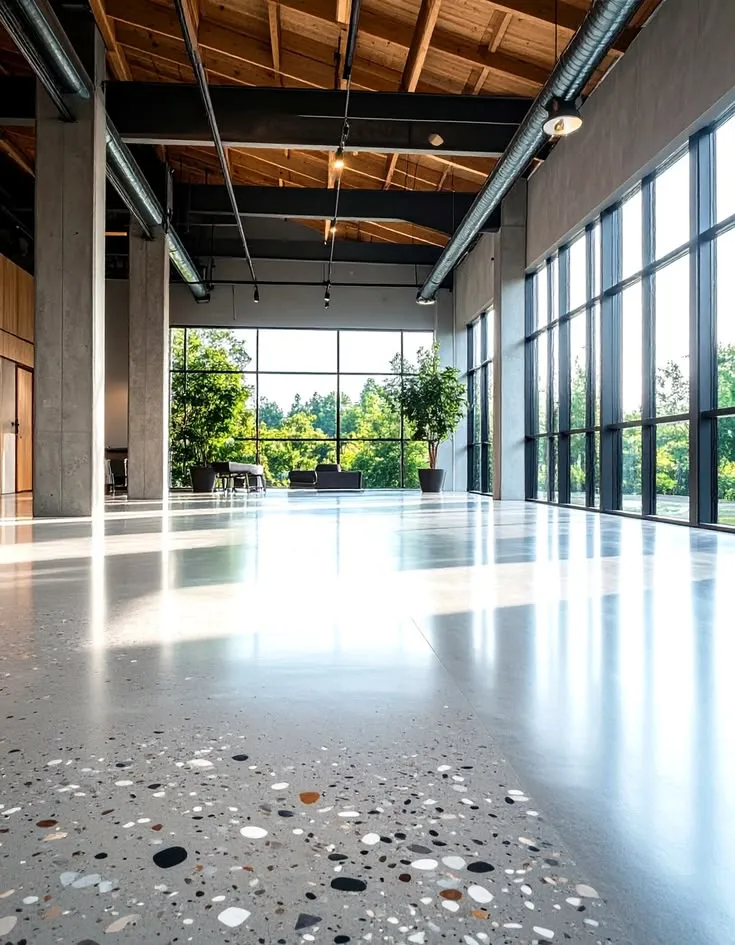
A converted industrial building may benefit from a natural concrete finish that complements exposed brick, steel beams, and large windows. Another property might require a softer appearance to work with modern furniture and interior partitions.
A polished concrete surface can have matte, satin, or higher-gloss characteristics. Reflectivity and aggregate exposure are separate design considerations, allowing property owners to select a combination that suits the interior.
Look at the Practical Benefits of Reuse
Retaining an existing slab may reduce the need for additional flooring materials. It can also avoid introducing unnecessary floor height around thresholds and adjoining rooms.
However, restoration is not automatically the cheapest solution. Removing old adhesives, repairing damaged sections, and achieving a specific decorative finish can increase costs. A realistic comparison should account for the condition of the existing concrete.
Ask the Right Questions Early
Before deciding whether to restore or replace the floor, property owners should discuss several practical concerns with their contractor.
Important questions include:
-
Is the existing concrete structurally suitable?
-
Will previous repairs remain visible?
-
How much aggregate can be exposed?
-
Are moisture concerns present?
-
What level of reflectivity is achievable?
-
Which maintenance procedures will be required?
Clear answers help establish realistic expectations and make competing renovation proposals easier to compare.
Consider How the Building Will Operate
A restored floor should support the property’s future activities. An office might prioritize appearance and straightforward cleaning, while a workshop could experience equipment movement and occasional chemical spills.
Surface traction is also important near entrances and areas exposed to moisture. Property owners should select finishing methods based on the actual environment rather than assuming a single polished surface suits every application.
Plan Around Other Renovation Work
Restoring an old concrete floor can involve grinding, dust extraction, repairs, and several polishing stages. These activities should be coordinated with electrical work, painting, and other interior improvements.
Scheduling requires careful consideration. Delicate furnishings and finished wall surfaces may need protection during preparation, while contractors should have clear access to the slab. Coordinating trades can help reduce unnecessary delays.
Develop Appropriate Maintenance Practices
Polished surfaces generally benefit from routine dust removal and cleaning with suitable products. Abrasive debris can contribute to wear, particularly in busy commercial environments.
Some floors may also require periodic maintenance or protective treatments depending on their use. Following the contractor’s recommendations helps preserve the finish while avoiding cleaning methods that could damage its appearance.
Conclusion
Older buildings can offer valuable renovation opportunities when existing materials are assessed before replacement decisions are made. Refinishing a suitable concrete slab may preserve architectural character while creating a practical surface for modern activities. The result depends on preparation, realistic design expectations, and appropriate maintenance. For property owners exploring concrete restoration across Atlanta and surrounding Georgia communities, atlantaflooring.io provides information about mechanical polishing and related concrete services. Thoughtful reuse can help an older space accommodate new purposes without automatically discarding materials that remain functional.
